The Futures of Work, Decoded.
In-depth editorial coverage of workflow design, automation mechanics, and the systematic shift toward local-first knowledge infrastructure.
On June 24, 2026, OpenAI and Broadcom pulled the curtain off the most consequential piece of silicon the AI industry has seen since the original Google TPU: Jalape\u00f1o, OpenAI's first custom-designed AI inference chip. Built in a record nine-month design-to-tape-out sprint\u2014accelerated, in part, by OpenAI's own models\u2014Jalape\u00f1o is an Application-Specific Integrated Circuit (ASIC) engineered from scratch to do one thing supremely well: run large language models at scale, for roughly half the cost of the Nvidia GPUs the company currently depends on. For developers, startups, and enterpriseenterprises agentbuilding-a-geo-distributed-automation-pipeline-overcoming-latency-and-legal-boundaries" class="internal-link">building on OpenAI's APIs, the implications are seismic.
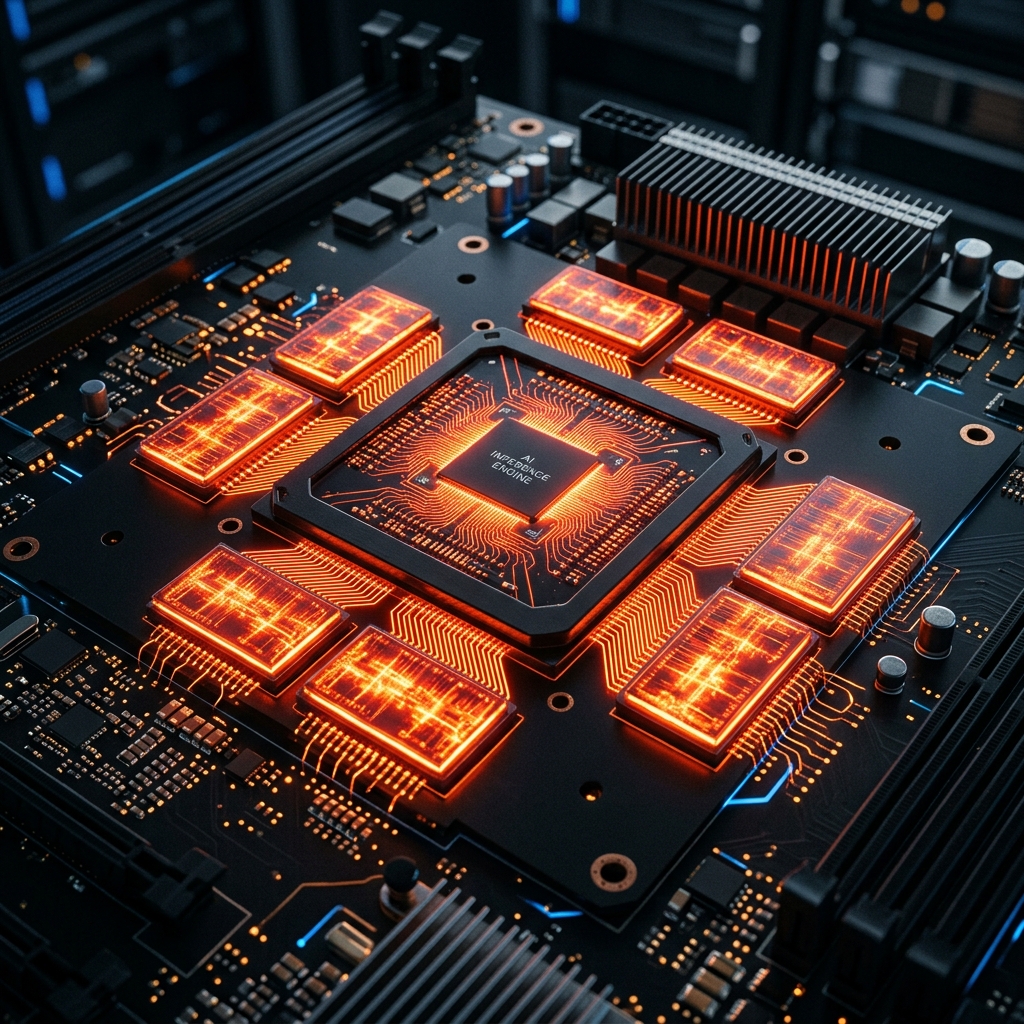
Figure 1: OpenAI's Jalape\u00f1o \u2014 a reticle-sized ASIC with eight HBM sites, purpose-built for LLM inference at gigawatt scale.
Running ChatGPT, Codex, and the GPT-5.6 family costs OpenAI billions of dollars per year in compute. The vast majority of that spend\u2014estimated at over 80%\u2014goes toward inference: zapier-alternatives-that-actually-handle-complex-logic" class="internal-link">actually running models in response to user queries, not training them. And here lies the economic inefficiency that Jalape\u00f1o was designed to solve.
Nvidia's A100 and H100 GPUs are general-purpose accelerators. They contain transistor budgets and circuit blocks for graphics rendering, scientific simulation, and training workloads that go completely unused during a standard LLM forward pass. You are paying for circuitry you never activate. A purpose-built ASIC strips away that overhead entirely, dedicating every transistor to the specific mathematical operations\u2014matrix multiplications, attention computations, KV-cache management\u2014that dominate inference.
While OpenAI has not released full specifications, the confirmed architectural details reveal a serious piece of engineering:
| Specification | Detail |
|---|---|
| Chip Type | Application-Specific Integrated Circuit (ASIC) for LLM inference |
| Die Size | Reticle-sized (maximum lithographic area) |
| Memory | Eight HBM (High Bandwidth Memory) sites surrounding central compute die |
| Interconnect | Broadcom Ethernet (not NVLink), enabling commodity networking |
| Design-to-Tape-Out | Nine notionmonths (AI-accelerated design) |
| Fabrication | TSMC (process node undisclosed) |
| System Integration | Celestica (board, rack, and system-level packaging) |
| Status | Engineering samples running GPT-5.3-Codex-Spark workloads |
| Deployment Target | Late 2026, gigawatt-scale alongside Microsoft |
Perhaps the most model-shifting detail is the timeline. search-beyond-the-traditional-seo-playbook" class="internal-link">Traditional custom chip design takes 18\u201336 months from architecture to tape-out. OpenAI completed Jalape\u00f1o in nine months. The acceleration came from a feedback loop that would have been impossible five years ago: OpenAI used its own language models to explore the chip's design space, optimize memory layouts, simulate workloads, and identify bottlenecks before committing to physical silicon. This is AI recursively improving its own hardware \u2014 the first credible example of an intelligence bootstrapping its own substrate.
Figure 2: General-purpose GPU vs. custom ASIC \u2014 Jalape\u00f1o strips away unused circuitry to dedicate every transistor to LLM inference.
If Jalape\u00f1o delivers on its 50% cost reduction promise, the downstream effects for the developer framework will be substantial:
- Cheaper API Calls: Developers building on OpenAI's APIs could see token pricing drop significantly as inference becomes cheaper to serve.
- Faster Response Times: An ASIC optimized for attention mechanisms and KV-cache management should reduce latency, enabling more responsive -ai-vs-traditional-automation-whats-the-difference" class="internal-link">agentic workflows.
- The Lock-In Trade-Off: Custom silicon means custom software stacks. Developers who build deeply integrated OpenAI-native workflows may find switching costs rising as the framework moves away from commodity CUDA-based infrastructure.
- The Broadcom Axis: Broadcom's role as the industrialization partner\u2014handling networking, packaging, and system integration\u2014positions it as a critical chokepoint in the AI infrastructure supply chain, alongside TSMC.
No. And framing it that way misses the point. Jalape\u00f1o is a margin defense system, not a competitive weapon aimed at Nvidia's training GPU dominance. OpenAI remains heavily dependent on Nvidia for model training, and Nvidia's CUDA framework is deeply entrenched across the research community. What Jalape\u00f1o does is split the AI compute market into two distinct lanes:
| Workload | Dominant Hardware | Key Metric |
|---|---|---|
| Model Training | Nvidia GPUs (H100, B200, Rubin) | Peak FLOPS, interconnect bandwidth |
| Production Inference | Custom ASICs (Jalape\u00f1o, Google TPU, AWS Inferentia) | Cost-per-token, performance-per-watt |
Jalape\u00f1o is not a one-off project. It is the first chip in what OpenAI describes as a "multi-generation compute platform." The strategic vision is clear: control the full vertical stack from model architecture to silicon, reducing dependency on external hardware vendors and achieving the unit economics necessary to make AI truly ubiquitous. For the broader industry, the message is unmistakable: the era of running frontier AI models on general-purpose hardware is ending. The future belongs to purpose-built intelligence processors \u2014 and the companies that control them will control the economics of artificial intelligence itself.
Traditional GPUs like NVIDIA's H100 and A100 are general-purpose parallel processors. They excel at the matrix multiplications that underpin deep learning, but they also carry significant overhead: memory controllers optimized for graphics, fixed-function rasterization hardware, and thermal designs meant for sustained workloads across thousands of CUDA cores. A custom AI inference chip like Jalapeño strips away everything that isn't transformer inference. The result is a die layout where 70–80% of transistors serve matrix multiply-accumulate operations, compared to roughly 40–50% on a datacenter GPU. The memory hierarchy is redesigned around KV-cache access patterns rather than texture fetches, which means higher effective bandwidth per watt. Practically, this translates to 2–4x better tokens-per-watt for autoregressive generation workloads — the exact pattern that powers ChatGPT, Codex, and API completions.
Another key difference is the software stack. GPUs rely on CUDA and cuDNN, massive libraries that abstract hardware details but add latency at every kernel launch. Custom silicon ships with a purpose-built compiler that fuses operator graphs into monolithic kernels, eliminating kernel-launch overhead entirely. This is why OpenAI can run speculative decoding, continuous batching, and prefix caching natively on Jalapeño without the performance penalties these techniques incur on general-purpose GPU schedulers.
OpenAI's current API pricing reflects the reality that inference on NVIDIA GPUs is expensive. The H100 costs roughly $30,000–$40,000 per unit, consumes 700W under load, and delivers approximately 3,000 tokens per second for GPT-4-class models. Jalapeño is designed to change this equation fundamentally. Industry analysts project that a custom inference ASIC can achieve 3–5x better cost-per-token at scale, primarily through reduced hardware cost per inference unit, lower power consumption, and higher utilization rates since the chip is purpose-built for the workload it runs.
For developers, this matters because inference cost is the primary bottleneck limiting API usage. Today, many teams cap their token budgets, batch requests aggressively, or route queries to cheaper but less capable models to stay within spending limits. If OpenAI passes even a fraction of the Jalapeño cost savings to customers, we could see GPT-4-class inference pricing drop to GPT-3.5-class levels within 18–24 months of the chip's deployment. This opens up use cases that are currently economically infeasible: real-time code review on every commit, continuous conversational agents that maintain full context, and multimodal pipelines that process images, audio, and text simultaneously without cost anxiety.
The broader market impact is equally significant. If OpenAI demonstrates that custom silicon can slash inference costs, every major AI provider — Google, Anthropic, Meta — will accelerate their own chip programs. This could trigger a pricing race that benefits the entire ecosystem, similar to how AWS, Azure, and GCP drove cloud computing costs down through infrastructure competition.
For developers building on OpenAI's APIs, the Jalapeño chip represents both an opportunity and a strategic consideration. On the opportunity side, cheaper inference means you can build more ambitious applications. Consider a code review agent that analyzes every pull request with GPT-4-level reasoning — at current pricing, a mid-size team processing 50 PRs per day would spend $15,000–$25,000 monthly. With a 3x cost reduction, that drops to $5,000–$8,000, which is within reach for most startups.
On the strategic side, developers should pay attention to which models and features first appear on Jalapeño-powered infrastructure. OpenAI will likely optimize their most popular models for the new silicon first, which means latency improvements may be uneven across the model catalog. Teams building latency-sensitive applications — real-time agents, interactive coding assistants, live translation — should benchmark their specific use cases after migration and be prepared to adjust prompt strategies if the inference characteristics change subtly.
There's also an architectural consideration worth monitoring: custom chips enable inference patterns that were impractical on GPUs. Techniques like speculative decoding, continuous batching with dynamic padding, and KV-cache compression may become default rather than optional optimizations. Developers who understand these techniques will be better positioned to take advantage of the performance improvements as they roll out.