The Futures of Work, Decoded.
In-depth editorial coverage of workflow design, automation mechanics, and the systematic shift toward local-first knowledge infrastructure.
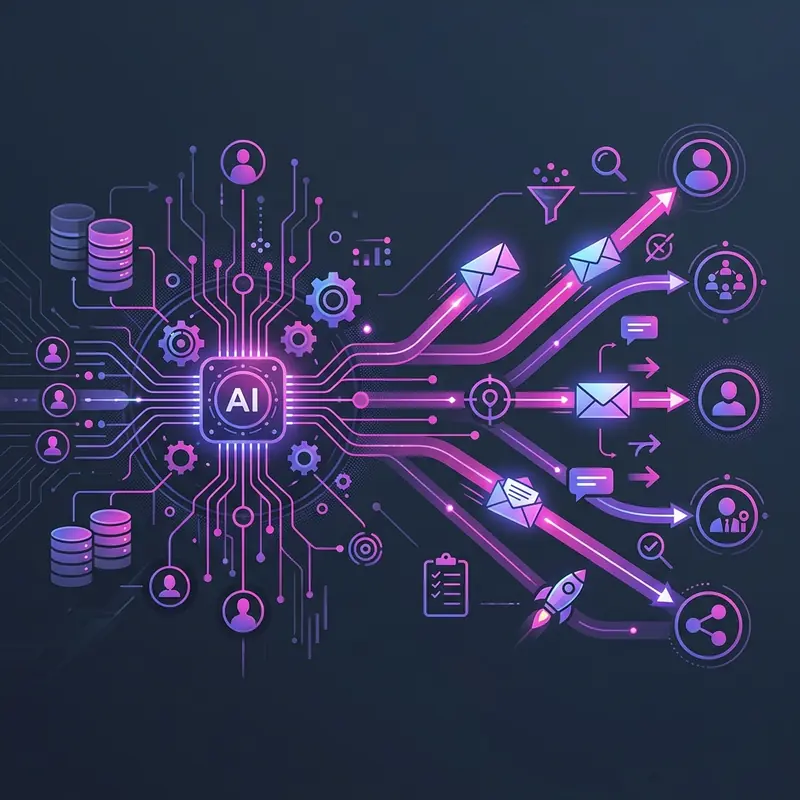
As the industry moves toward autonomous agent systems, the importance of structuring your underlying databases and connections becomes clear. Teams that rush to deploy model interfaces without verifying their schemas face serious operational failures. By establishing clean, isolated container environments and designing strict validation rules, you ensure your software remains stable. We explore how to configure these systems to achieve maximum performance and cost efficiency.
For years, GitHub Copilot was the default tool for AI-assisted coding. It popularized inline suggestions and made writing boilerplate code much faster. However, in 2026, developers are analyzing their software budgets. Our guide on GitHub Copilot alternatives 2026 compares the best alternatives.
The primary driver of this shift is the need for repository-level editing. While Copilot is excellent at single-line suggestions, it struggles when asked to refactor code across multiple files. Developers are looking for tools that offer deeper repository indexing and more flexible billing models.
Looking forward, this setup provides a modular foundation that can scale alongside your team's operational needs. By Decoupling the reasoning models from static visual interfaces, developers can swap foundation engines without rewriting the downstream integration scripts. This modularity ensures your infrastructure remains compatible with future model releases and protects your workflows from single-vendor lock-in.
When analyzing these initial parameters, operations teams must establish baseline metrics before introducing any model layers. Measure the average time required to complete the task manually, track error frequency, and define your target latency thresholds. This data serves as a control group to evaluate the AI system's performance, ensuring that your automation delivers clear efficiency gains without degrading service quality.
Supermaven has become a popular alternative for developers who prioritize typing speed. It features a custom-built model with a 300,000 token context window. This large window allows it to index your entire active file history, providing highly relevant completions.
In our testing, Supermaven responded in under fifty milliseconds, significantly faster than Copilot. Additionally, it offers a capable free tier with unlimited completions. For developers who want fast autocomplete without paying a monthly fee, Supermaven is the best choice.
Looking forward, this setup provides a modular foundation that can scale alongside your team's operational needs. By Decoupling the reasoning models from static visual interfaces, developers can swap foundation engines without rewriting the downstream integration scripts. This modularity ensures your infrastructure remains compatible with future model releases and protects your workflows from single-vendor lock-in.
From a coding perspective, the connection script should use standard error handling blocks to catch database connection timeouts and API rate limit responses. Configure an exponential backoff loop with randomized jitter to retry failed executions automatically, preventing the pipeline from failing during network spikes. This backoff logic is a critical best practice for maintaining connection durability.
Cursor is a complete fork of VS Code, integrating AI features directly into the editor UI. It uses a custom model named Composer to manage multi-file changes. You can ask Cursor to refactor an API route, and it edits multiple files concurrently.
Cursor offers a Pro plan for twenty dollars per month, including five hundred fast requests. However, you can also plug in your own API keys. This pay-as-you-go billing model is highly popular among freelancers who want to manage their development spending directly.
Looking forward, this setup provides a modular foundation that can scale alongside your team's operational needs. By Decoupling the reasoning models from static visual interfaces, developers can swap foundation engines without rewriting the downstream integration scripts. This modularity ensures your infrastructure remains compatible with future model releases and protects your workflows from single-vendor lock-in.
To manage your computational budget, monitor token usage per session using integrated logging middleware. Startups should set up automated alerts that trigger when a single customer thread consumes more than fifty thousand tokens, protecting their accounts from runaway reasoning loops. Additionally, configure static prompt structures to read from cache, reducing input billing rates.
For developers with strict data privacy requirements, local execution is the preferred option. Runtimes like Ollama allow you to run coding models (like Qwen-Coder or Llama-Coder) entirely on your local machine. This setup requires no internet connection and has zero API costs.
Running local models ensures that your proprietary source code never leaves your computer, satisfying security audits. It also eliminates recurring subscription bills, helping you escape the copilot tax that plagues cloud services. It is an excellent option for developers working under NDAs.
Looking forward, this setup provides a modular foundation that can scale alongside your team's operational needs. By Decoupling the reasoning models from static visual interfaces, developers can swap foundation engines without rewriting the downstream integration scripts. This modularity ensures your infrastructure remains compatible with future model releases and protects your workflows from single-vendor lock-in.
When deploying these systems in production, developers must isolate the execution environment using container sandboxes. This prevents the model from executing unauthorized system commands or writing malicious code to your project directory. Configure read-only database connections and use strict role-based access rules to limit data exposure, satisfying enterprise security compliance guidelines.
Aider is a terminal-first coding assistant that integrates directly with git. It allows you to edit files using simple terminal prompts. When you request a change, Aider edits the files, runs your local test suite, and commits the changes with a descriptive message.
Aider supports direct API key integration, allowing you to pay only for the tokens you consume. This transparency is highly valued by developers who want to avoid flat-rate subscription fees. It is a highly efficient tool for managing repository updates, as we covered in our terminal automation guide.
Looking forward, this setup provides a modular foundation that can scale alongside your team's operational needs. By Decoupling the reasoning models from static visual interfaces, developers can swap foundation engines without rewriting the downstream integration scripts. This modularity ensures your infrastructure remains compatible with future model releases and protects your workflows from single-vendor lock-in.
Before launching the automation, write a comprehensive suite of unit tests to validate the model's structured outputs. The test suite should verify that the JSON keys match your target schema and check for database constraint violations. If the output fails validation, the system should log the trace and prompt the agent to regenerate the data, ensuring database state integrity.
If you want the fastest autocomplete suggestions, select Supermaven. If you need deep repository refactoring within a visual IDE, Cursor is the leading choice. If you prioritze data privacy and offline access, configure local models via Ollama.
For terminal-first developers who want git automation, Aider or Claude Code are the best options. Evaluate your workflow requirements and budget before committing to a subscription. The future of software engineering is modular, open-source, and local-first.
Looking forward, this setup provides a modular foundation that can scale alongside your team's operational needs. By Decoupling the reasoning models from static visual interfaces, developers can swap foundation engines without rewriting the downstream integration scripts. This modularity ensures your infrastructure remains compatible with future model releases and protects your workflows from single-vendor lock-in.
In conclusion, maintaining a clean, modular architecture is the key to scaling your AI operations. By separating the reasoning models from visual presentation code, you can upgrade foundation engines without rewriting your core database integration scripts. This modularity protects your systems from single-vendor lock-in and keeps your infrastructure adaptable to future model updates.
| Tool | Hosting Mode | Autocomplete Speed | Custom API Keys | Monthly Cost |
|---|---|---|---|---|
| GitHub Copilot | Cloud Only | Medium (~150ms) | No (Locked to Copilot subscription) | $10 (Individual) |
| Supermaven | Cloud Only | Fast (~50ms) | No (Subscription model) | Free tier / $10 Pro |
| Cursor IDE | Cloud / Local Keys | Fast (~80ms) | Yes (direct Claude/OpenAI keys) | $20 Pro plan |
| Ollama (Qwen-Coder) | Local (Private) | Dependent on GPU hardware | Yes (Self-Hosted Model) | Open-Source (Free) |
| Aider | Local CLI + API Keys | Dependent on API route | Yes (Full Pay-as-you-go) | Open-Source (Free) |
To deepen your understanding of these systems, you can review our practical guide on how Claude Code is transforming terminal-first automation. For software teams managing code assets, look at our checklist for why the July 2026 MCP spec is the real battleground for agentic IDEs and learn about scaling AI APIs without going broke on serverless GPUs. Additionally, businesses can reduce computing expenses by exploring driving developers to local-first agentic AI to avoid the copilot tax, and resolve integration bottlenecks by researching building a second brain with local RAG in Obsidian.
Successfully integrating these advanced AI layers into your daily operations requires balancing configuration speed against long-term maintainability. By standardizing on open-source standards and establishing clean database boundaries, you insulate your company from API cost spikes and database errors. Start by automating a single back-office task, monitor the execution logs, and expand the setup as your team builds confidence in the system.
Supermaven offers a fast, free autocompletion tier for VS Code, and running Qwen-Coder locally via Ollama is completely free.
Yes, Cursor allows you to enter your own Anthropic or OpenAI API keys, paying only for the tokens you consume instead of the standard Pro plan.
On modern hardware (like an Apple Silicon Mac or an Nvidia GPU), local coding models like Qwen-Coder respond in under one hundred milliseconds, making them highly usable.
Aider is a CLI tool that integrates with git, modifying multiple files and auto-commiting edits, whereas Copilot focuses on suggesting code line-by-line in the editor.
Because local assistants run entirely offline on your machine, your proprietary code is never sent to cloud servers, preventing data leaks and compliance breaches.