The Futures of Work, Decoded.
In-depth editorial coverage of workflow design, automation mechanics, and the systematic shift toward local-first knowledge infrastructure.
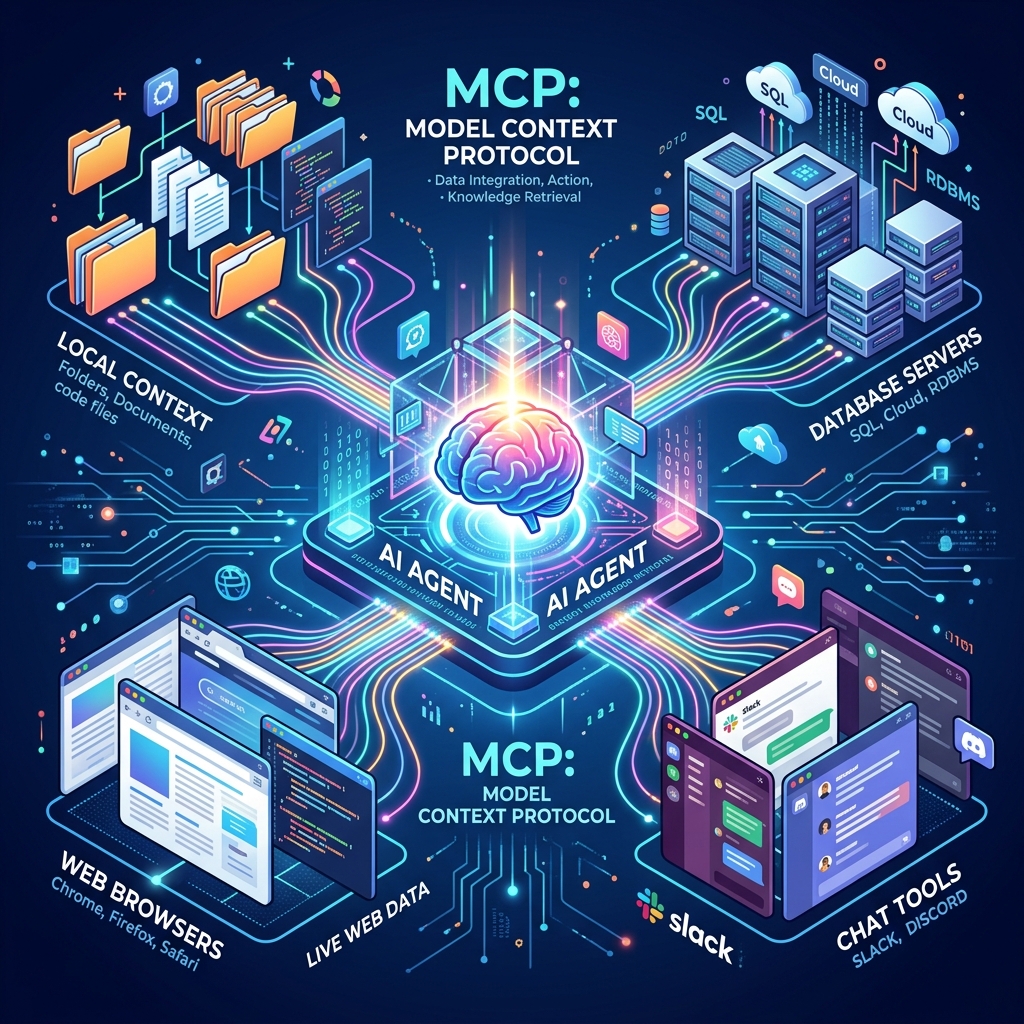
For the past six notionmonths, the battle for developers' hearts and minds has been fought at the IDE layer. Tech articles and Reddit threads are filled with comparisons of Cursor's multi-file codebase indexing versus -vs-chatgpt-vs-gemini-for-content-teams-in-2026" class="internal-link">claude-for-business-in-2026-the-complete-practical-guide" class="internal-link">claude-vs-gpt-4o-for-automation-scripting-a-six-month-comparison" class="internal-link">Claude Code's terminal-native agent loop. But while these front-end interfaces capture the headlines, the real architectural shift is happening beneath the surface at the protocol level. Anthropic's **Model Context Protocol (MCP)** has quietly transitioned from an experimental "glue code" utility into the industry standard for linking AI agents to local contexts. With the upcoming **July 28, 2026 specification release**, the protocol is undergoing a major upgrade, transitioning from simple local `stdio`-based transports to stateless, cloud-native HTTP streaming. This article examines why this protocol shift is the true battleground for -ai-vs-traditional-automation-whats-the-difference" class="internal-link">agentic IDEs and how to implement a secure, production-grade MCP server under the new standard.
Figure 1: The Model Context Protocol acting as a standardized interface between the AI agent and the developer's local data sources.
When Anthropic first launched MCP, the reference implementation relied on standard input/output (stdio) channels. To connect an IDE to a local database, the client launched a separate node process that communicated by writing JSON-RPC messages to stdin and reading from stdout. While this stdio approach was simple to configure locally, it introduced severe limitations when scaling to team environments:
- **No Centralized Authentication**: Because the client spawns local server processes directly, there is no native way to enforce single sign-on (SSO) or API token validation across teams.
- **Context Bloat**: Because every connected tool is exposed in the system promptprompt, loading multiple local databases or API directories quickly pollutes the LLM's context window, degrading reasoning quality.
- **Zero Audit Trails**: Local stdio communication is ephemeral. System administrators cannot monitor what queries an autonomous agent runs against sensitive internal databases.
| Technical Metric | Legacy stdio Transport | July 2026 HTTP Streaming Spec |
|---|---|---|
| Network Topology | Local process spawning (stdin/stdout) | Stateless HTTP gateway / SSE (Server-Sent Events) |
| Security & Auth | None (Relies on local terminal permissions) | Standard OAuth2, JWT tokens, and SSO integration |
| Tool Discovery | Static loading (All tools loaded at boot) | Progressive Discovery (Loaded dynamically on prompt match) |
| Auditability | Ephemeral (Logs disappear when terminal closes) | Persistent gateway logging & SIEM ingestion |
| Scale Limit | Single user / local machine only | Multi-tenant, cloud-distributed routing clusters |
The July 2026 specification standardizes on Server-Sent Events (SSE) for server-to-client streaming, backed by stateless POST endpoints for client-to-server tool executions. This enables MCP servers to run as standard serverless functions (e.g. AWS Lambda, Vercel Serverless, or FastAPI VPS containers). Below is a Python implementation of a compliant stateless MCP server using FastAPI, exposing a local SQLite context to an agentic client:
from fastapi import FastAPI, Header, HTTPException
from pydantic import BaseModel
import sqlite3
app = FastAPI(title="Production SQLite MCP Server")
class ToolExecutionRequest(BaseModel):
tool_name: str
arguments: dict
# Enforce secure authentication header
def verify_api_key(authorization: str = Header(...)):
if authorization != "Bearer mcp_secure_secret_token_2026":
raise HTTPException(status_code=401, detail="Unauthorized: Invalid MCP Auth Token")
@app.get("/mcp/tools")
def list_available_tools(authorization: str = Header(...)):
verify_api_key(authorization)
# Progressive discovery: describe available database queries
return {
"tools": [
{
"name": "query_database_schema",
"description": "Fetch the database tables and schema columns for analysis.",
"parameters": {}
}
]
}
@app.post("/mcp/execute")
def execute_tool(payload: ToolExecutionRequest, authorization: str = Header(...)):
verify_api_key(authorization)
if payload.tool_name == "query_database_schema":
conn = sqlite3.connect("local_data.db")
cursor = conn.cursor()
cursor.execute("SELECT name, sql FROM sqlite_master WHERE type='table'")
tables = cursor.fetchall()
conn.close()
return {"result": str(tables)}
raise HTTPException(status_code=404, detail="Requested tool not found")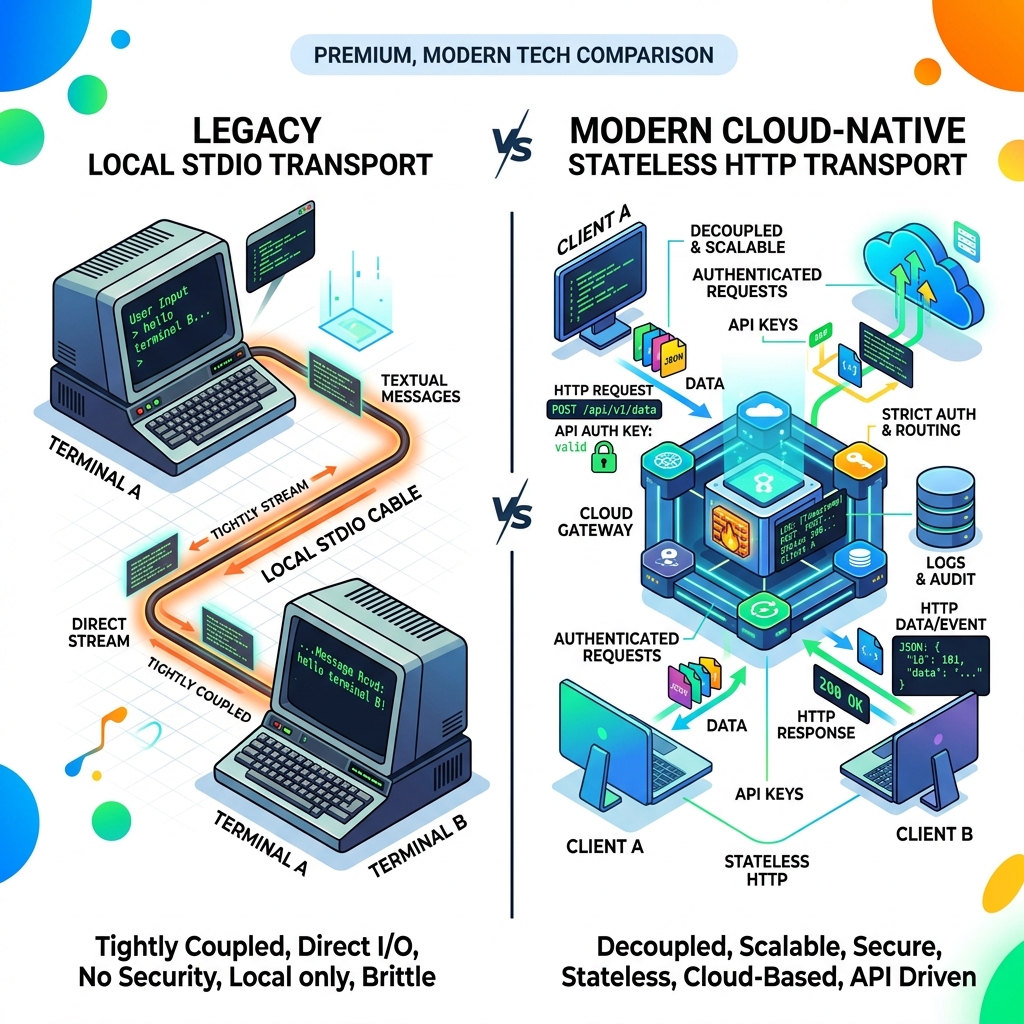 local-firstarchitectures diagram" class="article-detail-image" loading="lazy" width="800" height="800">
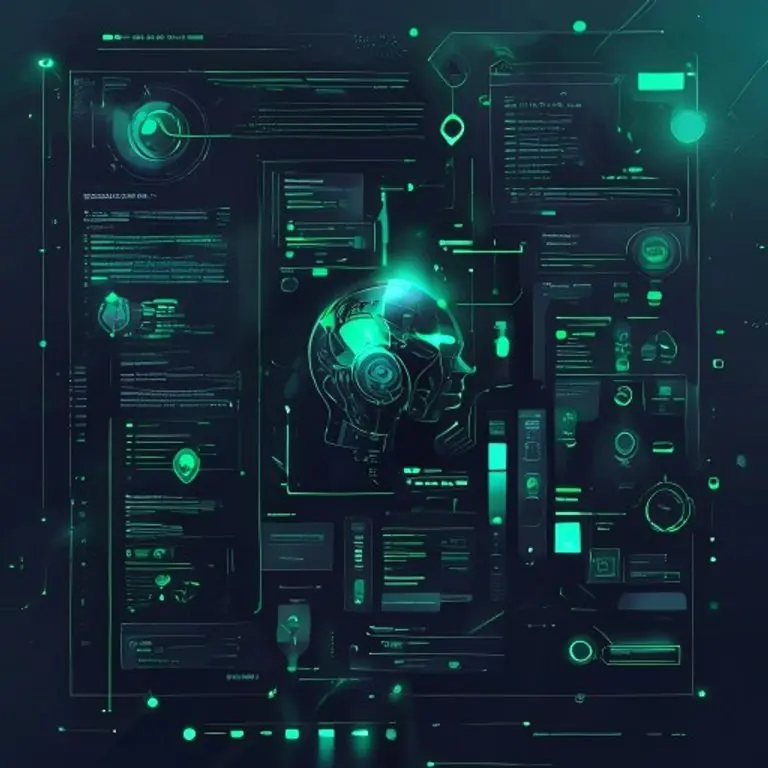
Figure 2: The architecture transition from local process piping (stdio) to cloud-native HTTP gateways with token-level security and progressive discovery.
Transitioning to cloud-native MCP gateways allows engineering teams to sandbox tools and enforce read-only safety limits. Because the LLM does not execute queries directly on your filesystem, the risk of `agentjacking` or command injection is mitigated. Security managers can configure gateways to block high-risk SQL statements (such as `DROP TABLE` or `DELETE`) or require a human manager's manual approval in the browser dashboard before running mutations. As agentic IDEs like Claude Code and Cursor become default tools in corporate environments, setting up these stateless, governed MCP gateways will be the difference between secure automation and major data loss.
While developer chats are focused on Cursor's GUI vs Claude Code's terminal prompt, systems programmaticarchitects look at the underlying integrations. The upcoming July 2026 Model Context Protocol upgrade represents the maturity of agentic software engineering. By replacing fragile local stdio processes with stateless HTTP-native routers, the tech community is preparing AI agents to work securely in team environments, paving the way for enterprise-grade autonomous coding platforms.
The Model Context Protocol defines a standardized interface between AI agents and external tools, data sources, and services. At its core, MCP uses a JSON-RPC 2.0 transport layer over stdio (for local processes) or HTTP+SSE (for remote servers). The protocol defines three primitive message types: tools (actions the agent can invoke), resources (data the agent can read), and prompts (reusable interaction templates). This separation is critical because it gives tool developers explicit control over what the agent can do, read, and say.
The connection lifecycle follows a handshake pattern. When an agent starts, it sends an initialize message containing its protocol version and capabilities. The server responds with its own capabilities and the list of available tools, resources, and prompts. This capability negotiation means the agent knows exactly what's available before it tries anything — no guessing, no failed API calls, no silent errors. After initialization, the agent can send tools/call requests for any tool listed in the server's capabilities, and the server responds with structured results.
What makes MCP superior to ad-hoc tool-use APIs is the bi-directional communication model. Unlike a simple function-call API where the agent sends a request and waits for a response, MCP supports server-initiated notifications. A file-watching tool can push updates when a file changes; a database monitor can alert the agent when a threshold is exceeded. This event-driven model enables agentic workflows that react to their environment rather than polling for changes.
Building an MCP server is surprisingly straightforward, especially with the official SDKs available in TypeScript, Python, and Rust. The server file imports the MCP SDK, defines a Server instance, and registers tool handlers using decorators. Each tool definition includes a JSON Schema for its input parameters, a human-readable description, and an async handler function. The handler receives validated input and returns a structured response. The transport layer is handled by the SDK — you just call server.run(StdioServerTransport()) and the server listens on stdin/stdout.
Production MCP servers should implement rate limiting, input sanitization, and structured error responses. The protocol defines a standard error format with codes like ToolNotFound, InvalidParams, and InternalError, which agents can handle programmatically. For remote servers, add authentication middleware (API keys or OAuth) and HTTPS transport. The governance checklist for AI agents applies directly to MCP servers — log every tool invocation, audit access patterns, and implement circuit breakers for downstream services.
If you're currently using OpenAI's function-calling API or Anthropic's tool-use format, migrating to MCP involves three phases. Phase 1: Audit your existing tool definitions. Map each function to either a tool, resource, or prompt primitive in MCP. Most function-call tools become MCP tools; configuration data becomes MCP resources; common prompt templates become MCP prompts. Phase 2: Implement the MCP server wrapper. The SDK provides adapter patterns that let you reuse your existing handler logic — you're primarily changing the transport layer and capability negotiation, not the business logic.
Phase 3: Update your agent code to use MCP client libraries instead of direct API calls. The MCP client handles connection management, capability negotiation, and reconnection automatically. The biggest behavioral difference is that MCP agents discover available tools at runtime rather than receiving a static tool list in the system prompt. This means tools can be added, removed, or updated without restarting the agent — a significant operational advantage for multi-agent architectures where different agents need different tool sets.
Budget 2–4 weeks for the migration of a medium-complexity tool set (10–20 tools). The payoff is substantial: MCP's standardized interface means your tools work with any compatible agent framework, not just one vendor's API. This vendor independence is increasingly valuable as the agent ecosystem fragments across OpenAI, Anthropic, Google, and open-source frameworks.