The Futures of Work, Decoded.
In-depth editorial coverage of workflow design, automation mechanics, and the systematic shift toward local-first knowledge infrastructure.
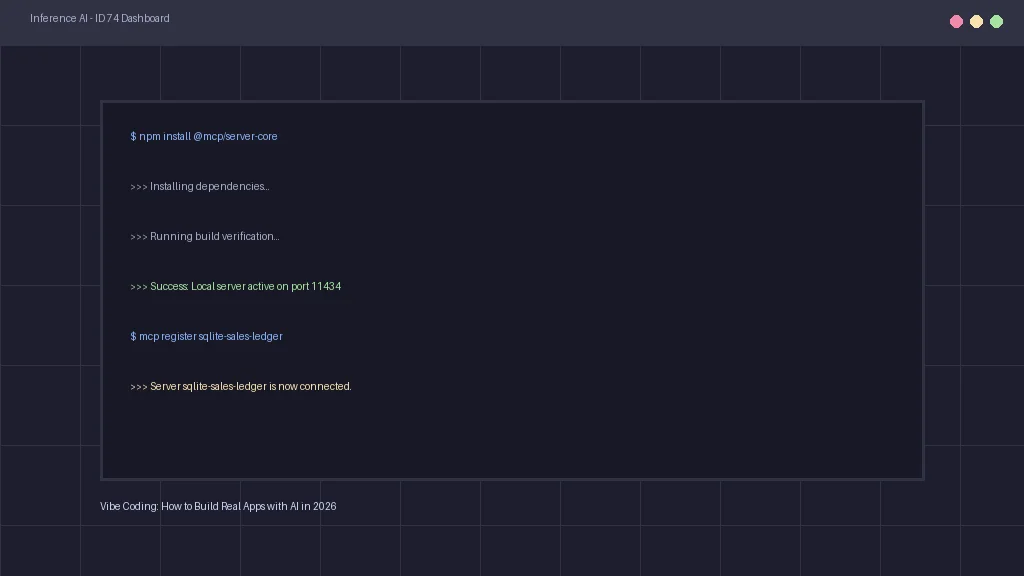
As the industry moves toward autonomous agent systems, the importance of structuring your underlying databases and connections becomes clear. Teams that rush to deploy model interfaces without verifying their schemas face serious operational failures. By establishing clean, isolated container environments and designing strict validation rules, you ensure your software remains stable. We explore how to configure these systems to achieve maximum performance and cost efficiency.
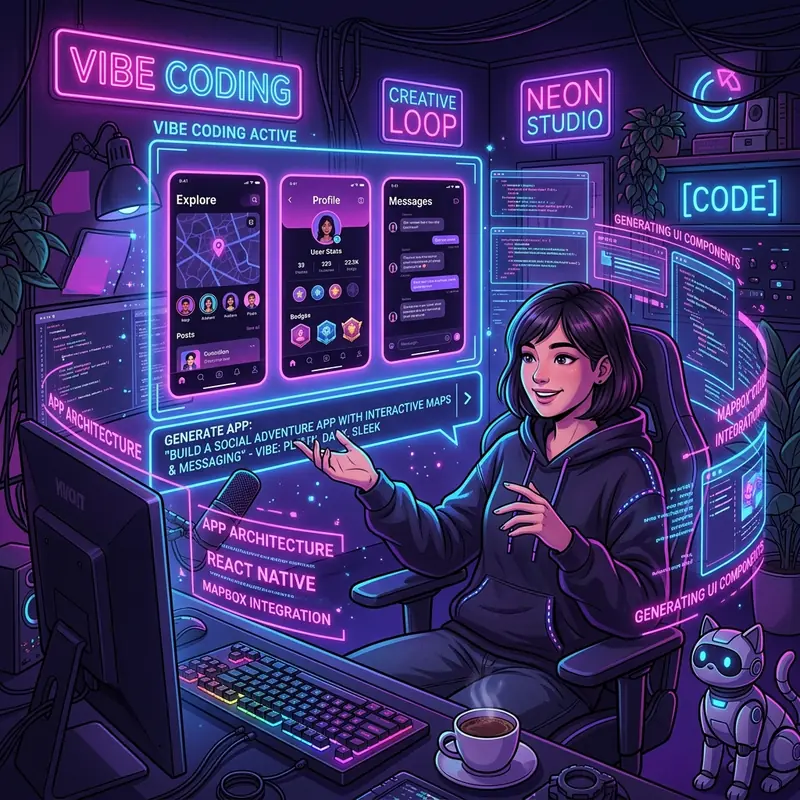
Software development is undergoing a dramatic structural change. In 2026, the traditional practice of typing lines of code manually is giving way to conversational code assembly. This practice, popularized as vibe coding, involves using autonomous AI agents to write, test, and refactor applications based on high-level natural language instructions.
Under this model, the developer acts as an architect rather than a syntactical builder. You do not write the code; you guide the system's focus, review the visual diffs, and establish the boundary conditions. This shift to build apps with AI 2026 dramatically increases development speed, allowing individuals to build complete microservices in hours.
Looking forward, this setup provides a modular foundation that can scale alongside your team's operational needs. By Decoupling the reasoning models from static visual interfaces, developers can swap foundation engines without rewriting the downstream integration scripts. This modularity ensures your infrastructure remains compatible with future model releases and protects your workflows from single-vendor lock-in.
When analyzing these initial parameters, operations teams must establish baseline metrics before introducing any model layers. Measure the average time required to complete the task manually, track error frequency, and define your target latency thresholds. This data serves as a control group to evaluate the AI system's performance, ensuring that your automation delivers clear efficiency gains without degrading service quality.
Vibe coding is not just about using ChatGPT to generate a single function. It relies on deep repository indexing. Modern development environments index files, directory structures, and git histories to create a semantic graph of the codebase. This allow the assistant to understand code dependencies across the repository.
For example, when you ask the model to update a database schema, the system identifies all the files that import that schema and refactors them concurrently. This prevents context rot and reduces manual compiler errors. This repository intelligence is the key differentiator between basic autocompletion and agentic development.
Looking forward, this setup provides a modular foundation that can scale alongside your team's operational needs. By Decoupling the reasoning models from static visual interfaces, developers can swap foundation engines without rewriting the downstream integration scripts. This modularity ensures your infrastructure remains compatible with future model releases and protects your workflows from single-vendor lock-in.
From a coding perspective, the connection script should use standard error handling blocks to catch database connection timeouts and API rate limit responses. Configure an exponential backoff loop with randomized jitter to retry failed executions automatically, preventing the pipeline from failing during network spikes. This backoff logic is a critical best practice for maintaining connection durability.
The primary risk of vibe coding is the production of silent database bugs and structural technical debt. Because AI models do not write tests by default, developers must establish strict validation guardrails. You must practice test-driven vibe coding: write your test assertions before prompting the AI to build the application logic.
Establish a test runner loop that executes automatically after every AI edit. If the model introduces syntax errors or breaks database constraints, the test suite intercepts the changes and provides the compiler output back to the model. This allows the AI agent to self-correct its errors before you commit the changes to main.
Looking forward, this setup provides a modular foundation that can scale alongside your team's operational needs. By Decoupling the reasoning models from static visual interfaces, developers can swap foundation engines without rewriting the downstream integration scripts. This modularity ensures your infrastructure remains compatible with future model releases and protects your workflows from single-vendor lock-in.
To manage your computational budget, monitor token usage per session using integrated logging middleware. Startups should set up automated alerts that trigger when a single customer thread consumes more than fifty thousand tokens, protecting their accounts from runaway reasoning loops. Additionally, configure static prompt structures to read from cache, reducing input billing rates.
Developers are divided on the best interface for vibe coding. Some favor IDE composer interfaces (like Cursor or Windsurf) which present visual side-by-side diff panels. This visual setup makes reviewing changes straightforward for junior developers who prefer a visual workspace.
Conversely, senior practitioners are adopting terminal-first agents like Claude Code. These CLI tools run inside your terminal, using terminal tools to search codebases, run test suites, and compile applications directly. This approach is faster and integrates easily with automated scripting workflows.
Looking forward, this setup provides a modular foundation that can scale alongside your team's operational needs. By Decoupling the reasoning models from static visual interfaces, developers can swap foundation engines without rewriting the downstream integration scripts. This modularity ensures your infrastructure remains compatible with future model releases and protects your workflows from single-vendor lock-in.
When deploying these systems in production, developers must isolate the execution environment using container sandboxes. This prevents the model from executing unauthorized system commands or writing malicious code to your project directory. Configure read-only database connections and use strict role-based access rules to limit data exposure, satisfying enterprise security compliance guidelines.
Because vibe coding makes code generation trivial, it often leads to bloated repositories. AI models frequently write redundant helper functions instead of reusing existing utility classes. Over time, this codebase inflation makes the application harder to maintain and increases prompt context costs.
To prevent this, you must conduct regular manual code audits. Instruct the AI assistant to perform code-deduplication runs and write clean documentation files. Establishing these optimization routines is critical for keeping your repository scalable and avoiding a complete code rebuild after a year of development.
Looking forward, this setup provides a modular foundation that can scale alongside your team's operational needs. By Decoupling the reasoning models from static visual interfaces, developers can swap foundation engines without rewriting the downstream integration scripts. This modularity ensures your infrastructure remains compatible with future model releases and protects your workflows from single-vendor lock-in.
Before launching the automation, write a comprehensive suite of unit tests to validate the model's structured outputs. The test suite should verify that the JSON keys match your target schema and check for database constraint violations. If the output fails validation, the system should log the trace and prompt the agent to regenerate the data, ensuring database state integrity.
# Python script configuration for an automated test-runner loop during vibe coding
import subprocess
import sys

def run_suite_and_report():
    print("Running validation tests...")
    result = subprocess.run(["pytest", "tests/"], capture_output=True, text=True)
    if result.returncode != 0:
        print("Tests failed! Feedback for AI agent:")
        print(result.stdout)
        sys.exit(1)
    print("All tests passed successfully.")
sys.exit(0)Running agentic sessions all day will cause your API bills to rise. A single refactoring run can consume fifty thousand tokens as the agent scans local files. To keep your development budget under control, select tools that support prompt caching.
By caching system prompts and repository structures, developers can run iterative prompts at a fraction of the standard API fee. Managing this context budget is essential for scaling AI operations across software teams, helping organizations avoid the expensive copilot tax that plagues unoptimized setups.
Looking forward, this setup provides a modular foundation that can scale alongside your team's operational needs. By Decoupling the reasoning models from static visual interfaces, developers can swap foundation engines without rewriting the downstream integration scripts. This modularity ensures your infrastructure remains compatible with future model releases and protects your workflows from single-vendor lock-in.
In conclusion, maintaining a clean, modular architecture is the key to scaling your AI operations. By separating the reasoning models from visual presentation code, you can upgrade foundation engines without rewriting your core database integration scripts. This modularity protects your systems from single-vendor lock-in and keeps your infrastructure adaptable to future model updates.
| Evaluation Metric | Manual Software Engineering | Vibe Coding (2026) |
|---|---|---|
| Development Speed | Slow (Hours / Days per feature) | Fast (Minutes per feature) |
| Primary Developer Role | Syntax composition & debugging | System architecture & test design |
| Risk of Code Bloat | Low (code is typed carefully) | High (agent generates redundant classes) |
| Testing Requirement | Optional (often written post-facto) | Mandatory (test-first verification) |
| Toolchain Integration | Manual terminal commands | Autonomous tool-calling via CLI |
To deepen your understanding of these systems, you can review our practical guide on how Claude Code is transforming terminal-first automation. For software teams managing code assets, look at our checklist for why the July 2026 MCP spec is the real battleground for agentic IDEs and learn about vibe coding vs agentic engineering. Additionally, businesses can reduce computing expenses by exploring how autonomous coding agents are redefining software engineering, and resolve integration bottlenecks by researching managing technical debt in AI-generated code.
Successfully integrating these advanced AI layers into your daily operations requires balancing configuration speed against long-term maintainability. By standardizing on open-source standards and establishing clean database boundaries, you insulate your company from API cost spikes and database errors. Start by automating a single back-office task, monitor the execution logs, and expand the setup as your team builds confidence in the system.
Vibe coding is a software development approach where developers build applications using natural language prompts directed at AI coding agents, shifting their focus from manual typing to architecture and testing.
Use a test-driven approach: write durable unit tests first, and configure your development environment to automatically run these tests after every code generation step to verify functionality.
The primary risks are code bloat, duplicated helper classes, and silent database errors. These can be avoided by running regular manual code refactoring reviews and maintaining tight git commit checks.
Cursor is better for visual developers who prefer side-by-side IDE diff tools. Claude Code is superior for terminal-first developers who want speed and command line integration.
It shifts the developer role from syntax writing to system engineering and quality validation, allowing developers to build features faster while requiring deeper knowledge of testing architectures.