The Futures of Work, Decoded.
In-depth editorial coverage of workflow design, automation mechanics, and the systematic shift toward local-first knowledge infrastructure.
As the industry moves toward autonomous agent systems, the importance of structuring your underlying databases and connections becomes clear. Teams that rush to deploy model interfaces without verifying their schemas face serious operational failures. By establishing clean, isolated container environments and designing strict validation rules, you ensure your software remains stable. We explore how to configure these systems to achieve maximum performance and cost efficiency.
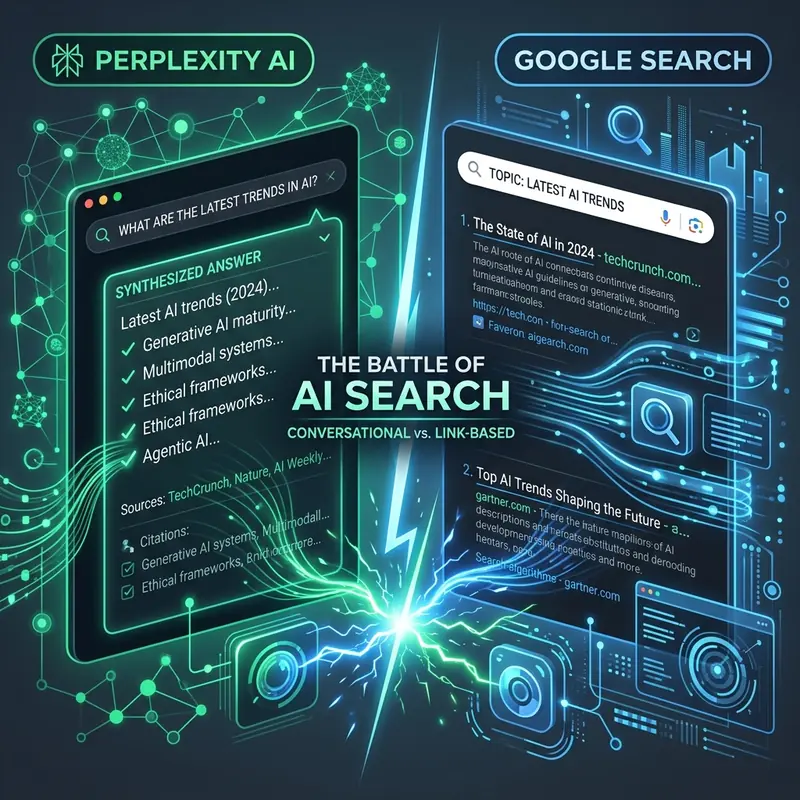
Traditional search engines have spent years prioritizing ad slots and SEO spam over user experience. If you query Google today, you must scroll past sponsored listings, video carousels, and content farms before finding an answer. This decline in usability has driven many to explore AI search, as detailed in our Perplexity AI review 2026.
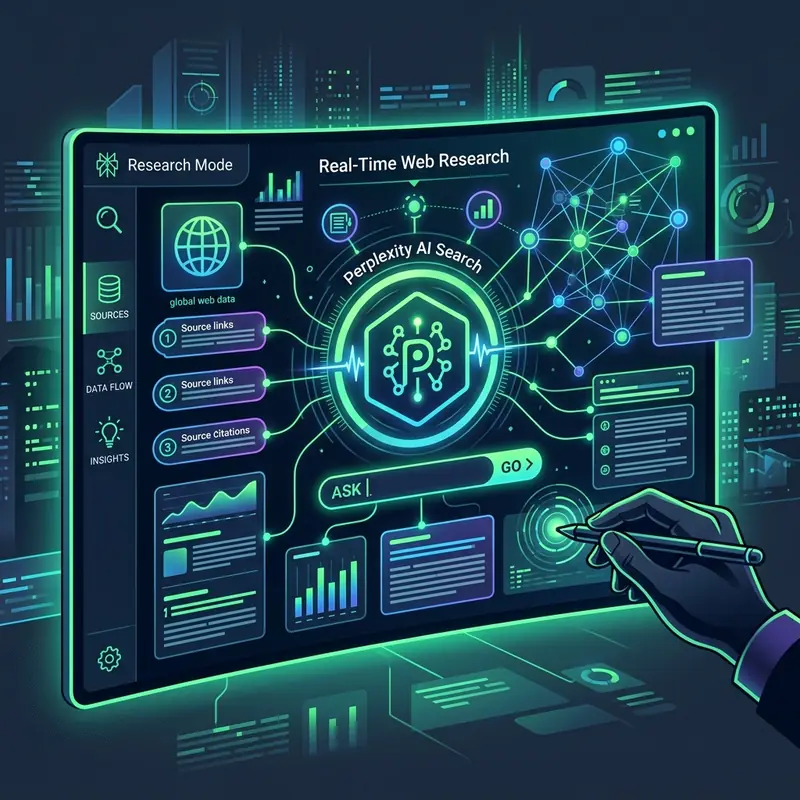
Perplexity AI represents a fundamental shift in search technology. Instead of providing list of links, it functions as a synthesis engine. It reads target webpages, compares facts, and writes a detailed answer with citations. We evaluate whether this system can replace Google for daily research.
Looking forward, this setup provides a modular foundation that can scale alongside your team's operational needs. By Decoupling the reasoning models from static visual interfaces, developers can swap foundation engines without rewriting the downstream integration scripts. This modularity ensures your infrastructure remains compatible with future model releases and protects your workflows from single-vendor lock-in.
When analyzing these initial parameters, operations teams must establish baseline metrics before introducing any model layers. Measure the average time required to complete the task manually, track error frequency, and define your target latency thresholds. This data serves as a control group to evaluate the AI system's performance, ensuring that your automation delivers clear efficiency gains without degrading service quality.
The primary advantage of Perplexity when evaluating Perplexity vs Google is citation transparency. Every statement in a Perplexity answer is linked to a source chip. Users can hover over the chip to see the target page snippet or click through to verify the source. This layout builds trust, which is crucial for academic and technical research.
Additionally, the platform includes a 'Pro' mode that executes multi-stage searches. When you submit a complex query, the engine breaks it down, runs parallel searches, and asks follow-up questions to narrow the context. This multi-step search provides a level of depth that static Google results cannot match.
Looking forward, this setup provides a modular foundation that can scale alongside your team's operational needs. By Decoupling the reasoning models from static visual interfaces, developers can swap foundation engines without rewriting the downstream integration scripts. This modularity ensures your infrastructure remains compatible with future model releases and protects your workflows from single-vendor lock-in.
From a coding perspective, the connection script should use standard error handling blocks to catch database connection timeouts and API rate limit responses. Configure an exponential backoff loop with randomized jitter to retry failed executions automatically, preventing the pipeline from failing during network spikes. This backoff logic is a critical best practice for maintaining connection durability.
A key feature of Perplexity Pro is the ability to choose your reasoning model. Subscribers can toggle between Anthropic's Claude 3.5 Sonnet, OpenAI's GPT-5.6, and Meta's Llama weights. This allows you to use the best model for your specific task.
For example, you can use Claude Sonnet for coding queries, GPT-5.6 for general reasoning, and Perplexity's custom model for rapid search responses. This flexibility is highly valuable for developers and content creators who would otherwise pay for multiple subscriptions. It is a highly cost-effective setup for knowledge workers.
Looking forward, this setup provides a modular foundation that can scale alongside your team's operational needs. By Decoupling the reasoning models from static visual interfaces, developers can swap foundation engines without rewriting the downstream integration scripts. This modularity ensures your infrastructure remains compatible with future model releases and protects your workflows from single-vendor lock-in.
To manage your computational budget, monitor token usage per session using integrated logging middleware. Startups should set up automated alerts that trigger when a single customer thread consumes more than fifty thousand tokens, protecting their accounts from runaway reasoning loops. Additionally, configure static prompt structures to read from cache, reducing input billing rates.
Perplexity Pro costs twenty dollars per month, matching the pricing of Claude Pro and ChatGPT Plus. For this fee, users get six hundred Pro queries per day. Once you exceed this cap, the platform drops to standard search mode, which uses smaller models.
For most researchers, this query cap is more than enough for daily operations. However, power users who run automated scripts can hit the cap quickly. If you are building automated pipelines, you must manage your query frequency or use direct API access to avoid service restrictions.
Managing the financial overhead of high-frequency LLM runs requires a detailed understanding of token pricing models. Cloud providers charge based on input and output data volumes, meaning that unoptimized prompts can quickly deplete your development budget. Developers should implement aggressive context caching strategies to store static documentation and system rules on the server. This caching reduces input token expenses by up to 90% per request.
When deploying these systems in production, developers must isolate the execution environment using container sandboxes. This prevents the model from executing unauthorized system commands or writing malicious code to your project directory. Configure read-only database connections and use strict role-based access rules to limit data exposure, satisfying enterprise security compliance guidelines.
While Perplexity is excellent for users, it introduces risks for web publishers. Because the engine answers informational queries on-page, CTR to independent blogs has dropped by up to 60%. Publishers can no longer rely on simple page views to fund their writing.
To survive, publishers must transition to GEO generative engine optimization. Optimize your site to be cited in Perplexity's source chips. This requires writing high-density content, placing summary boxes at the top of pages, and structuring data with clean HTML markdown. If you do not adapt, your site will disappear from AI search index pools.
Looking forward, this setup provides a modular foundation that can scale alongside your team's operational needs. By Decoupling the reasoning models from static visual interfaces, developers can swap foundation engines without rewriting the downstream integration scripts. This modularity ensures your infrastructure remains compatible with future model releases and protects your workflows from single-vendor lock-in.
Before launching the automation, write a comprehensive suite of unit tests to validate the model's structured outputs. The test suite should verify that the JSON keys match your target schema and check for database constraint violations. If the output fails validation, the system should log the trace and prompt the agent to regenerate the data, ensuring database state integrity.
For research, coding, and technical writing, Perplexity is the superior choice. It eliminates search spam and delivers cited answers in seconds. However, Google remains the preferred option for local queries, navigational searches, and shopping transactions.
The future of search is conversational and agentic, shifting how startups build their CRM pipelines and manage online operations. By integrating Perplexity into your daily research stack, you save hours of manual browsing. Traditional search is giving way to AI-driven synthesis.
Looking forward, this setup provides a modular foundation that can scale alongside your team's operational needs. By Decoupling the reasoning models from static visual interfaces, developers can swap foundation engines without rewriting the downstream integration scripts. This modularity ensures your infrastructure remains compatible with future model releases and protects your workflows from single-vendor lock-in.
In conclusion, maintaining a clean, modular architecture is the key to scaling your AI operations. By separating the reasoning models from visual presentation code, you can upgrade foundation engines without rewriting your core database integration scripts. This modularity protects your systems from single-vendor lock-in and keeps your infrastructure adaptable to future model updates.
| Feature | Google Search | Perplexity AI Pro |
|---|---|---|
| Interface Output | List of webpage links & ad slots | Synthesized answer with citation chips |
| Average Latency | 100 - 300 ms | 800 - 2000 ms |
| Ad Density | High (dominant on top of page) | Very Low (minimal sponsored chips) |
| Model Selection | Proprietary Google ranking | Toggle between Claude, GPT, and Llama |
| Primary Strength | Local queries, shopping, navigation | Research synthesis, coding, comparisons |
To deepen your understanding of these systems, you can review our practical guide on best AI writing tools for content creators. For software teams managing code assets, look at our checklist for vibe coding vs agentic engineering and learn about best AI writing tools for content creators. Additionally, businesses can reduce computing expenses by exploring vibe coding vs agentic engineering, and resolve integration bottlenecks by researching how to use Claude for business in 2026.
Successfully integrating these advanced AI layers into your daily operations requires balancing configuration speed against long-term maintainability. By standardizing on open-source standards and establishing clean database boundaries, you insulate your company from API cost spikes and database errors. Start by automating a single back-office task, monitor the execution logs, and expand the setup as your team builds confidence in the system.
Perplexity AI is a conversational search engine that uses large language models to synthesize direct, cited answers to user queries, referencing real-time web data.
Perplexity is superior for technical and academic research as it summarizes sources and provides inline citations, eliminating the need to click through multiple ad-heavy links.
Yes, for power users who want access to Claude 3.5 Sonnet, GPT-5.6, and Meta's Llama models under a single subscription, along with six hundred Pro queries per day.
Website owners must practice Generative Engine Optimization (GEO): present clear HTML tables, place summary lists at the top of pages, and ensure all claims are backed by structured JSON-LD data.
The free tier is unlimited but uses smaller models. The Pro plan includes six hundred queries per day using advanced reasoning models like Claude Sonnet and GPT-5.6.