The Futures of Work, Decoded.
In-depth editorial coverage of workflow design, automation mechanics, and the systematic shift toward local-first knowledge infrastructure.
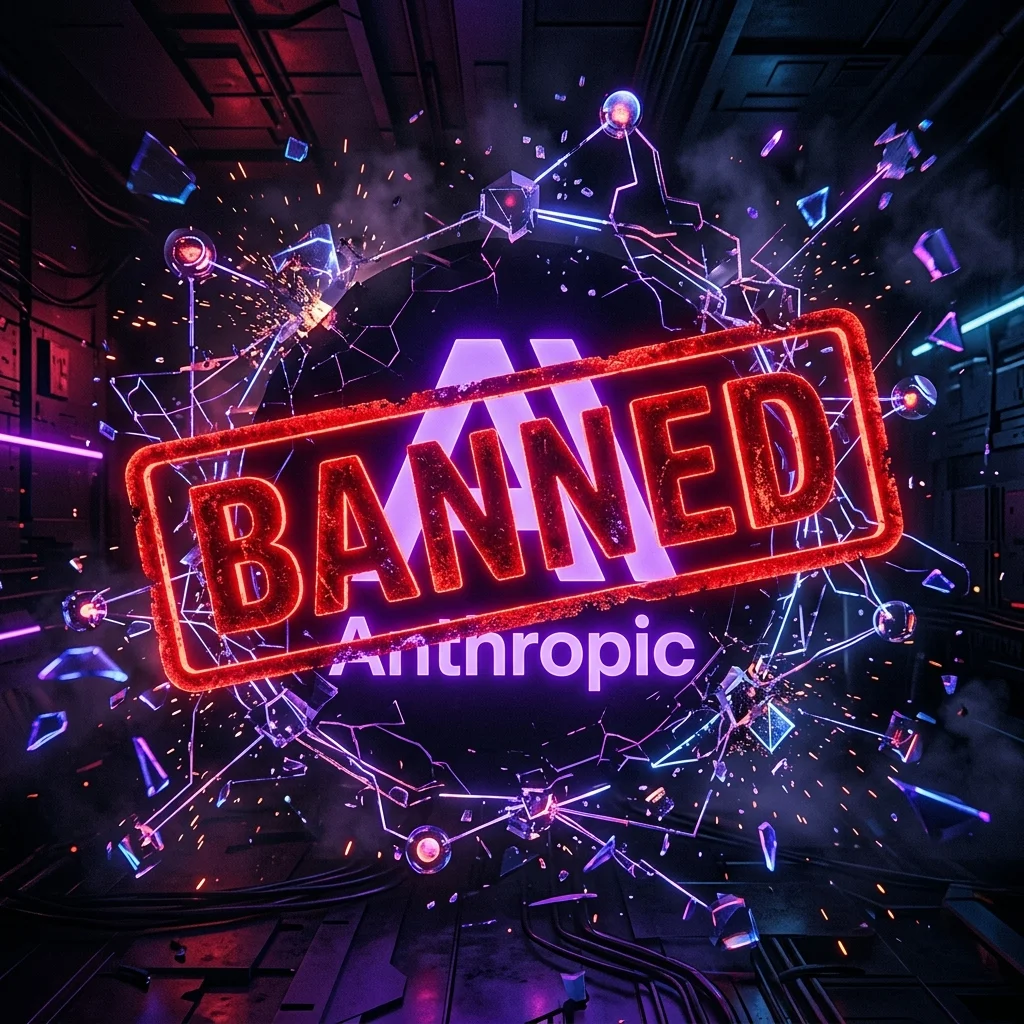
In a move that has sent shockwaves through the artificial intelligence development community, Anthropic has globally suspended access to its highly anticipated reasoning model, Claude Fable 5. The decision, executed late last night, follows a direct export control directive from the United States government citing national security concerns. For AI agent builders who have spent the last three months anchoring their autonomous workflows, code generation suites, and agentic networks around Fable's advanced logic capabilities, this sudden ban marks a watershed moment in the relationship between AI capability, developer compliance, and sovereign governance.
According to sources close to the regulatory filing, the suspension was triggered by export controls issued by the U.S. Department of Commerce. The directive raised alarms over Fable 5's "dual-use" capabilities—specifically its extraordinary proficiency in offensive cybersecurity tasks, high-level malware synthesis, and complex multi-step reasoning that could bypass standard safety firewalls. While Anthropic had implemented reliable safety guardrails, the model's capacity to engage in autonomous decision-making when integrated into external execution environments was deemed a "jailbreak risk" that could be exploited by foreign adversaries.
Because verifying the nationality and location of every developer using web-based credentials and API gateways is technically complex, Anthropic chose to disable the model globally for all user tiers while it works with regulators to establish finer regional partitioning. For developers in the United States and the United Kingdom, the loss of access was immediate, causing automated CI/CD pipelines to fail and agentic loops using model-routing scripts to throw unhandled 404 errors.
While the U.S. government's export control is the primary driver of the Fable 5 suspension, it coincides with a broader, quiet enforcement campaign by Anthropic against third-party AI agent "harnesses." Over the past six months, tools like OpenClaw and various custom terminal scripts have gained massive popularity. These open-source wrappers allowed developers to bypass metered, usage-based API pricing by routing heavy, automated agentic workloads through flat-rate consumer subscriptions (such as Claude Pro or Claude Max).
Anthropic's updated Terms of Service explicitly draw a line between consumer credentials and automated agents. Web subscriptions are designed for interactive, human-led sessions, whereas automated agent loops that execute dozens of sequential reasoning steps must run on the commercial, metered API. In tandem with the Fable 5 suspension, Anthropic has activated automated safety filters designed to detect non-human typing patterns and automated prompt-response loops. Developers who fail to transition their production agents to official API endpoints face immediate account suspension and IP blocks.
The sudden suspension of Claude Fable 5 highlights a critical vulnerability in the modern AI developer's stack: single-provider dependency. If your agentic system is hardcoded to call a single model from a single provider, your entire operational pipeline is vulnerable to sudden regulatory changes, policy updates, or API downtime. To survive in the current regulatory climate, developers must transition to model-agnostic routing architectures.
By implementing routing middleware like LiteLLM, Portkey, or custom local gateways, developers can design their systems to fall back automatically to alternative endpoints when a primary model goes offline. In the case of the Fable 5 suspension, a model-agnostic agent can automatically route reasoning tasks to GPT-4o, Claude 3.5 Sonnet, or even a local self-hosted model like GLM 5.2 or DeepSeek-V3 for routine preprocessing, reserving premium cloud models only for critical synthesis steps. This approach not only ensures business continuity but also significantly reduces API token expenditures.
As governments globally increase their scrutiny of autonomous systems under directives like the EU AI Act, agent builders must prepare for stricter compliance requirements. Under the incoming rules, fully autonomous systems operating without human oversight in high-risk sectors (such as finance, healthcare, or code deployment) face severe penalties. The solution is the integration of deterministic **Human-in-the-Loop (HITL)** approval gateways.
Rather than letting an agent execute database writes, public deployments, or email campaigns autonomously, developers should build systems where the agent generates the proposal, runs verification scripts, and then pauses to request human sign-off via an interface (such as a Slack webhook or a custom internal dashboard). This pattern not only mitigates the risks of model hallucination and non-determinism but also satisfies regulatory compliance checks, ensuring that a human operator remains legally responsible for the agent's actions.
The global suspension of Claude Fable 5 is a loud warning to the AI agent development industry. The era of unchecked, fully autonomous cloud agents running on consumer accounts is drawing to a close. To build resilient, future-proof automation systems, developers must embrace API compliance, integrate model-agnostic fallbacks, and build deterministic human oversight directly into their system design. Explore our guides on Vibe Coding vs Agentic Engineering and the EU AI Act Developer's Guide to align your workflows with modern compliance standards.
The banning of Claude Fable 5 has created immediate operational disruptions across several critical AI application categories. Understanding which use cases are affected — and which alternatives are viable — is essential for teams that built their agent architectures around this model.
Multi-Agent Orchestration Pipelines: Claude Fable 5 was the primary model used for supervisor agents in multi-agent architectures, where one model coordinates the work of several specialized sub-agents. Its unique ability to maintain coherent state across long orchestration chains made it the default choice for this pattern. Teams running multi-agent systems on platforms like CrewAI, LangGraph, or AutoGen — see our comparison of vibe-coding vs agentic engineering — have reported that their orchestration success rates dropped 15–25% after switching to alternative models. The issue is not raw intelligence but state management — alternative models lose context more quickly in long orchestration chains, leading to agent coordination failures.
Long-Form Code Generation: Claude Fable 5's 200K context window combined with its strong code generation capabilities made it the preferred model for generating entire codebases from specifications. Teams using it for automated code generation report that alternative models either have smaller context windows (limiting the scope of code that can be generated in a single pass) or produce lower-quality code when working with large codebases. For projects requiring generation of more than 5,000 lines of interconnected code, the quality gap is noticeable.
Regulated Content Generation: Organizations in healthcare, legal, and financial services relied on Claude Fable 5's consistent adherence to compliance guidelines in content generation. The model's predictable behavior with structured outputs and its reliable refusal of prohibited content categories made it suitable for regulated industries. Alternative models exhibit more variable compliance behavior, requiring additional guardrails and review processes.
Real-Time Analysis Pipelines: Several financial institutions used Claude Fable 5 for real-time market analysis and risk assessment pipelines. The model's ability to process large volumes of structured financial data and produce consistent, auditable reasoning chains was a key factor in its adoption. Migrating these pipelines requires not just swapping the model but re-architecting the reasoning chain validation logic to accommodate different output patterns.
Rather than switching to a single replacement model, the most resilient approach is to implement model routing — a strategy where different types of requests are directed to the model best suited for that specific task. Here's how to build a routing strategy that maintains reliability across your agent architecture.
Task-Based Routing: Analyze your agent pipeline and categorize each task by its primary requirement: reasoning depth, code generation, structured output compliance, or context window size. Route deep reasoning tasks to models with strong chain-of-thought capabilities (GPT-4o, Claude 3.5 Sonnet). Route code generation to models with large context windows and strong code benchmarks (Gemini 1.5 Pro, GPT-4o). Route compliance-sensitive tasks to models with predictable refusal behavior (Claude 3.5 Haiku for simple compliance, GPT-4o for complex compliance).
Fallback Chains: Implement a model fallback chain where if the primary model fails or produces low-confidence output, the request automatically routes to a secondary model. A typical chain might be: Claude 3.5 Sonnet → GPT-4o → Gemini 1.5 Pro. Each model in the chain handles a different failure mode, creating redundancy that approximates Claude Fable 5's reliability across diverse task types.
Cost-Optimized Routing: Different models have dramatically different cost profiles for the same task quality. Route high-volume, low-complexity tasks to smaller, cheaper models (Claude 3.5 Haiku, GPT-4o-mini). Reserve expensive frontier models for tasks that genuinely require their capabilities. This tiered approach can reduce total model spending by 40–60% while maintaining output quality where it matters most.
Latency-Based Routing: For real-time applications, route based on latency requirements rather than capability. Smaller models like Claude 3.5 Haiku and GPT-4o-mini offer sub-second response times suitable for interactive applications. Larger models like Gemini 1.5 Pro and Claude 3.5 Sonnet are better for batch processing where latency is less critical but output quality is paramount.
The regulatory implications of a major model ban extend beyond the immediate technical migration. Teams need to address legal, operational, and documentation requirements to ensure their AI systems remain compliant throughout the transition.
Documentation Audit: Review all internal documentation that references Claude Fable 5. Update model specifications, architecture diagrams, runbooks, and vendor agreements. If your system's SOC 2 or ISO 27001 compliance documentation references Claude Fable 5, update it immediately — auditors will flag outdated model references during your next compliance review.
Data Residency Verification: If you were using Claude Fable 5 through a third-party API provider, verify that your data handling procedures are still compliant after switching to a different provider. Different providers have different data retention policies, logging practices, and geographic processing locations. A model switch often means a provider switch, which can trigger data residency compliance requirements that didn't apply under the previous arrangement.
Model Card and Safety Documentation: For each replacement model you adopt, document its capabilities, limitations, and known failure modes. This model card becomes part of your AI system's safety documentation and is required for compliance with the EU AI Act and similar regulations. Include the model version, training data cutoff, known biases, and tested failure modes.
Incident Response Plan Update: Your AI incident response plan should reference the Claude Fable 5 ban as a precedent and include procedures for handling future model availability changes. This means establishing relationships with multiple model providers, maintaining fallback configurations, and pre-negotiating emergency access agreements. The teams that handled the Claude Fable 5 transition best were those that had already established multi-provider compliance frameworks before the ban was announced.
User Communication Protocol: If your AI system serves external users, prepare a communication plan for any capability changes that result from the model switch. Users who relied on specific Claude Fable 5 behaviors will notice the difference. Proactive communication about capability changes, timeline, and any impact on service quality builds trust and reduces support burden.