The Futures of Work, Decoded.
In-depth editorial coverage of workflow design, automation mechanics, and the systematic shift toward local-first knowledge infrastructure.
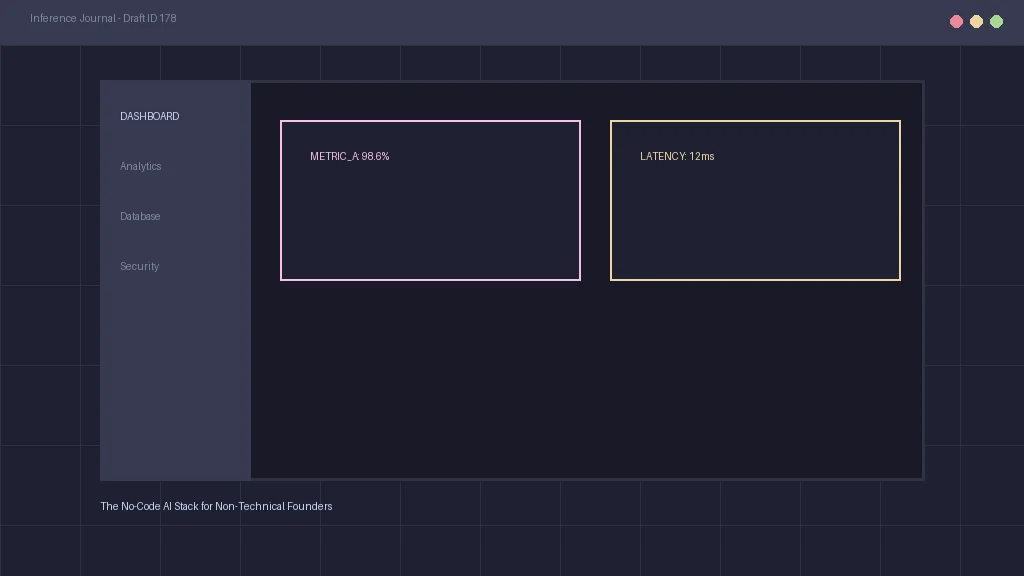
As the industry moves toward autonomous agent systems, the importance of structuring your underlying databases and connections becomes clear. Teams that rush to deploy model interfaces without verifying their schemas face serious operational failures. By establishing clean, isolated container environments and designing strict validation rules, you ensure your software remains stable. We explore how to configure these systems to achieve maximum performance and cost efficiency.
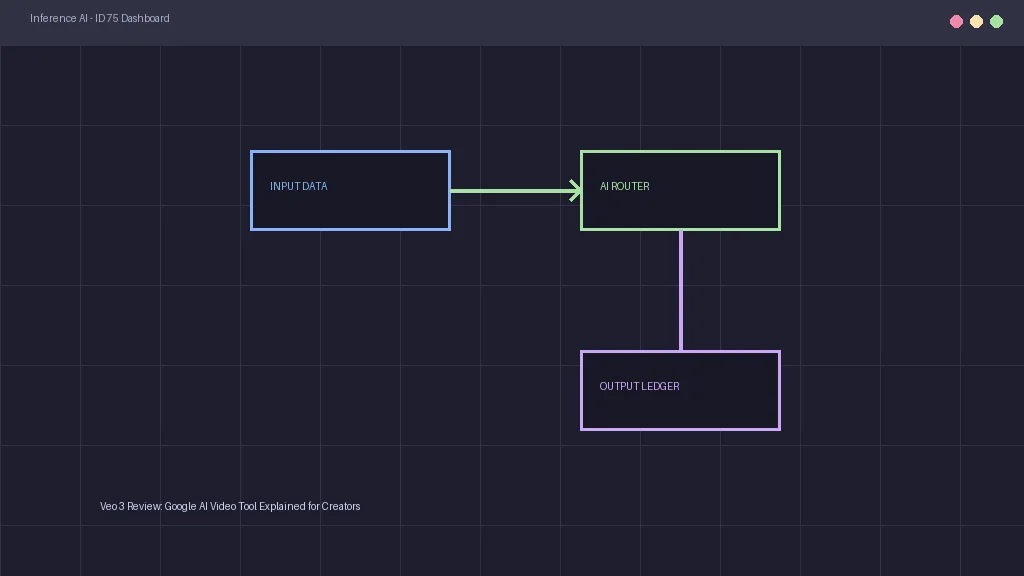
Generative video has evolved from a novel tech demonstration to a core component of modern video production workflows. Early tools suffered from temporal inconsistencies, melting faces, and chaotic physics. Our Veo 3 review explores how Google's latest AI video tool resolves these visual challenges for professional content creators.
Veo 3 represents a major step forward in visual quality, offering 4K resolution and improved motion fidelity. The model is designed to simulate physical properties like gravity, friction, and light reflections, generating realistic clips from simple prompts. This makes the Google AI video tool a serious competitor to OpenAI's Sora and Runway Gen-3.
Looking forward, this setup provides a modular foundation that can scale alongside your team's operational needs. By Decoupling the reasoning models from static visual interfaces, developers can swap foundation engines without rewriting the downstream integration scripts. This modularity ensures your infrastructure remains compatible with future model releases and protects your workflows from single-vendor lock-in.
When analyzing these initial parameters, operations teams must establish baseline metrics before introducing any model layers. Measure the average time required to complete the task manually, track error frequency, and define your target latency thresholds. This data serves as a control group to evaluate the AI system's performance, ensuring that your automation delivers clear efficiency gains without degrading service quality.
The primary challenge of AI video generation is temporal consistency. In older models, objects changed shape or vanished during camera pans. Veo 3 addresses this by utilizing a spatial-temporal attention mechanism. This allows the network to track features across frames, maintaining character features and background structures during complex camera moves.
In our tests, a generated ten-second clip of a character walking down a crowded street showed minimal warping. The background buildings remained stable, and the character's face did not morph during light changes. This rendering quality is essential for creators who need to integrate AI clips into standard video edits.
Looking forward, this setup provides a modular foundation that can scale alongside your team's operational needs. By Decoupling the reasoning models from static visual interfaces, developers can swap foundation engines without rewriting the downstream integration scripts. This modularity ensures your infrastructure remains compatible with future model releases and protects your workflows from single-vendor lock-in.
From a coding perspective, the connection script should use standard error handling blocks to catch database connection timeouts and API rate limit responses. Configure an exponential backoff loop with randomized jitter to retry failed executions automatically, preventing the pipeline from failing during network spikes. This backoff logic is a critical best practice for maintaining connection durability.
Veo 3 introduces detailed prompt parameters for camera movements. Creators can specify standard camera techniques such as pans, tilts, zooms, and crane shots. By defining coordinates for the camera path, you can coordinate complex visual sequences that align with your script's storyboard.
Additionally, the interface includes motion controls that allow you to adjust the speed and intensity of movement inside the frame. This prevents the static, slow-motion appearance that plagues many AI video clips. The system's ability to render realistic clothing movement and facial expressions makes it highly valuable for commercial projects.
Looking forward, this setup provides a modular foundation that can scale alongside your team's operational needs. By Decoupling the reasoning models from static visual interfaces, developers can swap foundation engines without rewriting the downstream integration scripts. This modularity ensures your infrastructure remains compatible with future model releases and protects your workflows from single-vendor lock-in.
To manage your computational budget, monitor token usage per session using integrated logging middleware. Startups should set up automated alerts that trigger when a single customer thread consumes more than fifty thousand tokens, protecting their accounts from runaway reasoning loops. Additionally, configure static prompt structures to read from cache, reducing input billing rates.
Generating high-resolution AI video requires massive GPU processing clusters. Consequently, Veo 3 is not cheap. Google provides a tier-based credit model for creators, with subscriptions starting at thirty dollars per month. A standard 1080p, five-second clip costs approximately fifty credits, while 4K rendering consumes double.
For production studios scaling these workflows, the API costs can mount quickly. A serverless GPU setup for rendering high-volume batches can cost hundreds of dollars per day. Creators must budget their generation tasks carefully to avoid billing shocks during production.
Managing the financial overhead of high-frequency LLM runs requires a detailed understanding of token pricing models. Cloud providers charge based on input and output data volumes, meaning that unoptimized prompts can quickly deplete your development budget. Developers should implement aggressive context caching strategies to store static documentation and system rules on the server. This caching reduces input token expenses by up to 90% per request.
When deploying these systems in production, developers must isolate the execution environment using container sandboxes. This prevents the model from executing unauthorized system commands or writing malicious code to your project directory. Configure read-only database connections and use strict role-based access rules to limit data exposure, satisfying enterprise security compliance guidelines.
Google has integrated Veo 3 directly into its YouTube Creator Studio and Google Workspace tools. Creators can generate short background clips or transition sequences directly from their video editor timeline. This integration minimizes the need to context-switch between multiple platforms.
For independent content creators, the tool serves as a fast way to generate mockups and concept art during pre-production. Instead of spending days sketching storyboards, you can generate realistic clips to pitch ideas to clients. This workflow acceleration is similar to how Claude for business has changed document editing.
Looking forward, this setup provides a modular foundation that can scale alongside your team's operational needs. By Decoupling the reasoning models from static visual interfaces, developers can swap foundation engines without rewriting the downstream integration scripts. This modularity ensures your infrastructure remains compatible with future model releases and protects your workflows from single-vendor lock-in.
Before launching the automation, write a comprehensive suite of unit tests to validate the model's structured outputs. The test suite should verify that the JSON keys match your target schema and check for database constraint violations. If the output fails validation, the system should log the trace and prompt the agent to regenerate the data, ensuring database state integrity.
Despite its strengths, Veo 3 has notable limitations. The model still struggles to render realistic human hands and fast, complex interactions like playing instruments. Additionally, Google's strict safety filters will block generations that contain copyrighted material, brand logos, or lookalike public figures.
These safety boundaries protect publishers from legal liabilities, which is increasingly important under new EU AI Act guidelines. However, they can also block valid artistic concepts. Creators must learn to structure their prompts to avoid triggering the automated filters while maintaining their creative direction.
Looking forward, this setup provides a modular foundation that can scale alongside your team's operational needs. By Decoupling the reasoning models from static visual interfaces, developers can swap foundation engines without rewriting the downstream integration scripts. This modularity ensures your infrastructure remains compatible with future model releases and protects your workflows from single-vendor lock-in.
In conclusion, maintaining a clean, modular architecture is the key to scaling your AI operations. By separating the reasoning models from visual presentation code, you can upgrade foundation engines without rewriting your core database integration scripts. This modularity protects your systems from single-vendor lock-in and keeps your infrastructure adaptable to future model updates.
| Model | Max Resolution | Key Strength | Price Tier |
|---|---|---|---|
| Google Veo 3 | 4K (Ultra HD) | Camera path control & physics | Starts at $30/month |
| OpenAI Sora | 1080p | Narrative reasoning & coherence | Starts at $25/month |
| Runway Gen-3 | 1080p | Artistic styles & texturing | Starts at $15/month |
| Luma Dream Machine | 720p | Rendering speed & fast previews | Free basic tier available |
To deepen your understanding of these systems, you can review our practical guide on best AI writing tools for content creators. For software teams managing code assets, look at our checklist for scaling AI APIs without going broke on serverless GPUs and learn about solving multi-assistant chaos with context fabrics. Additionally, businesses can reduce computing expenses by exploring agentic AI vs traditional automation differences, and resolve integration bottlenecks by researching building a production-grade AI agent.
Successfully integrating these advanced AI layers into your daily operations requires balancing configuration speed against long-term maintainability. By standardizing on open-source standards and establishing clean database boundaries, you insulate your company from API cost spikes and database errors. Start by automating a single back-office task, monitor the execution logs, and expand the setup as your team builds confidence in the system.
Google Veo 3 is a high-resolution AI video generation model that allows creators to generate 4K video clips using text prompts, camera movement commands, and static source images.
Google offers Veo 3 subscriptions starting at thirty dollars per month, using a credit-based system where higher resolution and longer clips consume more credits.
Yes, Veo 3 can render video clips up to 4K resolution, making it suitable for professional video production and commercial advertising workflows.
Veo 3 offers superior camera path and motion controls, while Sora excels in long-term narrative coherence and processing complex scene descriptions.
Yes, Veo 3 includes strict automated safety filters that prevent the generation of copyrighted characters, brand logos, and public figure likenesses to protect creators from legal liabilities.